Clawdmeter

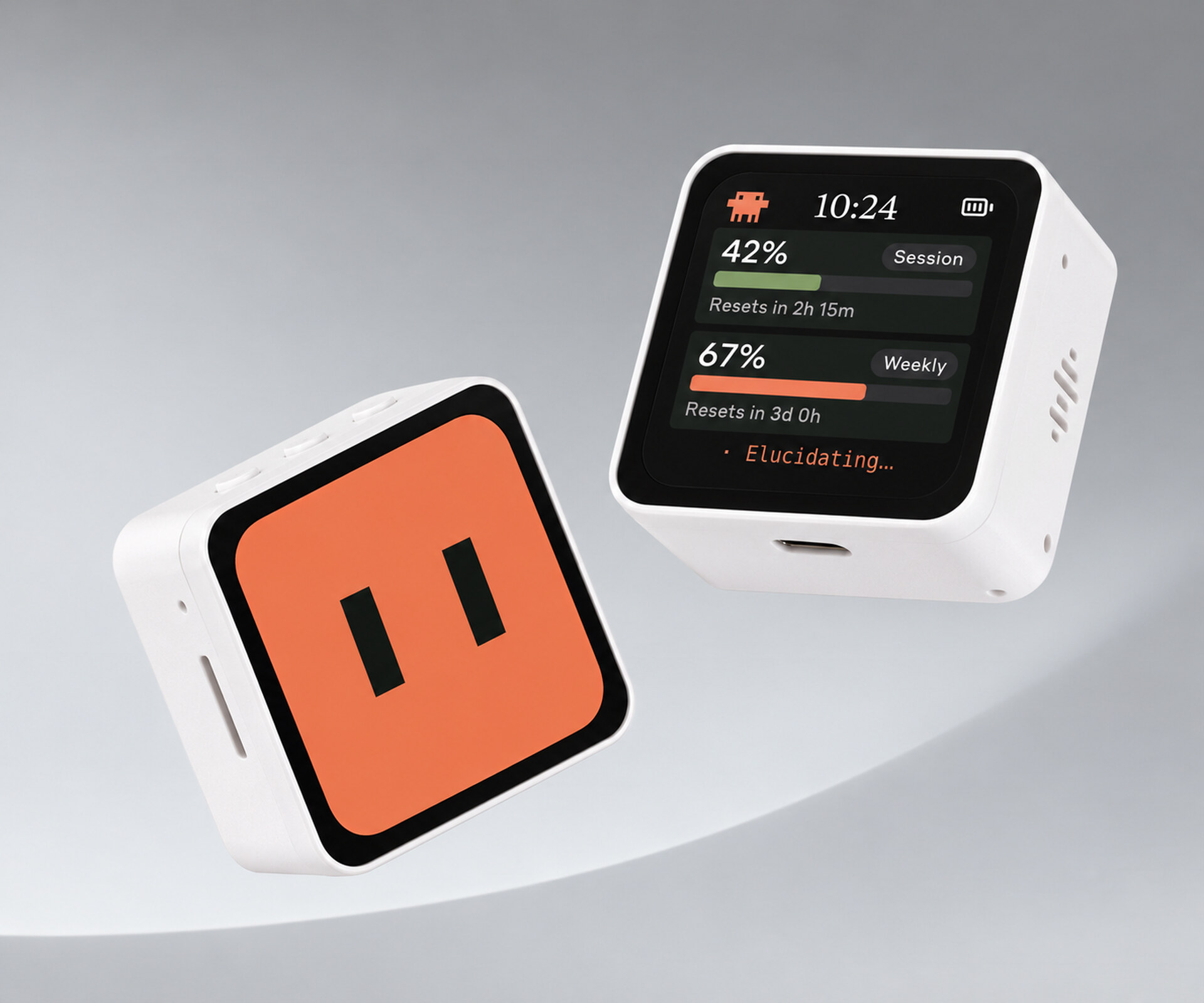
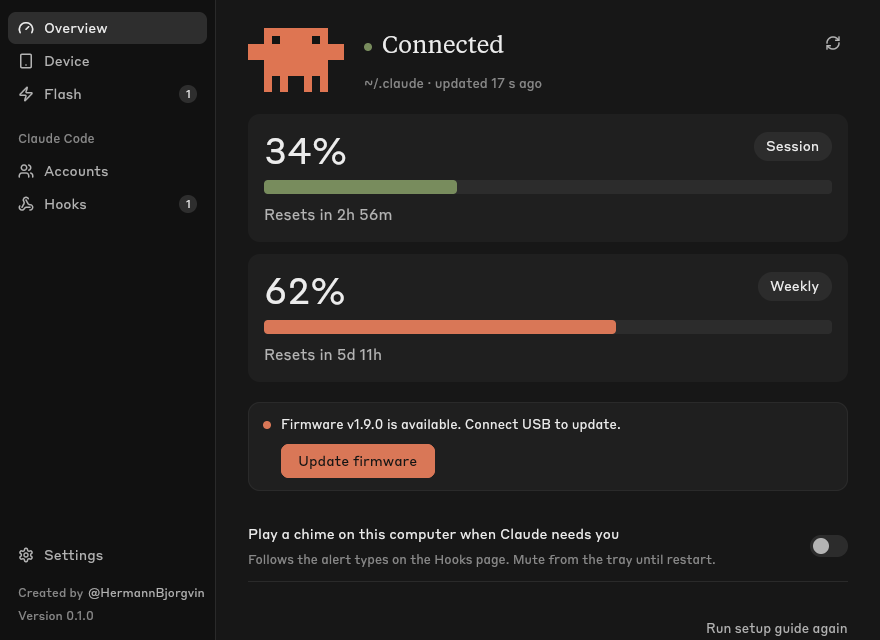
Clawdmeter shows your Claude Code usage limits on an ESP32 development board on your desk. Clawd lives on the device. He reacts to prompts, cheers you on, and alerts you when a session needs your attention.
Supported boards
Flagship
The reference board: everything is developed and tested on it first.
| Board | ||
|---|---|---|
 |
Waveshare ESP32-S3-Touch-AMOLED-2.16 | 480×480 AMOLED, 3 buttons, speaker. Original board. |
Stable
Supported on every release.
| Board | ||
|---|---|---|
 |
Waveshare ESP32-C6-Touch-AMOLED-2.16 | 480×480 AMOLED on the ESP32-C6, speaker. No PSRAM: animated corner Clawd, no full-size attention animation. |
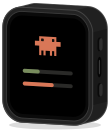 |
Waveshare ESP32-S3-Touch-AMOLED-1.8 | 368×448 AMOLED, 2 buttons, speaker. |
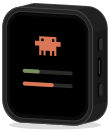 |
Waveshare ESP32-C6-Touch-AMOLED-1.8 | 368×448 AMOLED on the ESP32-C6. |
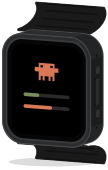 |
Waveshare ESP32-S3-Touch-AMOLED-2.06 | 410×502 AMOLED in a watch case. |
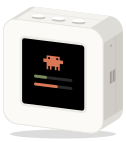 |
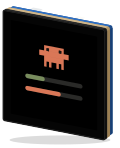
Waveshare ESP32-S3-Touch-LCD-1.54 | 240×240 IPS, 3 buttons, speaker. Smallest supported display. |
 |
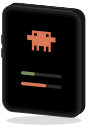
Waveshare ESP32-S3-Touch-LCD-4 | 480×480 IPS, 4 inches, one button. |
 |
LILYGO T4-S3 | 450×600 AMOLED, one button (BOOT; long-hold cycles brightness / scene). |
Experimental
Ports contributed by the community. Expect rough edges: bugs, or a layout that isn't optimal for the panel. If something is off, fix it and open a PR. If everything works, tell us in the Board support reports discussion (env name, firmware version, a photo) and we'll move the board to Stable.
| Board | ||
|---|---|---|
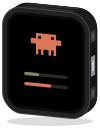 |
Waveshare ESP32-S3-Touch-LCD-1.83 | 240×284 IPS SPI TFT, BOOT + PWR buttons, rounded watch-style case. |
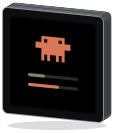 |
Guition ESP32-S3-4848S040 (4-inch 480×480) | 480×480 ST7701S RGB panel, GT911 touch, no buttons. Pair from the computer. |
 |
Waveshare ESP32-S3-Touch-AMOLED-1.43 | 466×466 round AMOLED. BOOT is the only button (push-to-talk); pair by touch hold. |
 |
Waveshare ESP32-S3-Touch-AMOLED-1.32 | 466×466 round AMOLED. BOOT rotates the UI; no HID buttons. |
 |
ESP32-2432S024C Cheap Yellow Display (portrait) | 240×320 ST7789, CST820 capacitive touch, classic ESP32 without PSRAM. One button (BOOT = PWR role: brightness, hold to pair). Env esp32_2432s024c (portrait) or esp32_2432s024c_landscape (320×240). |
 |
ESP32-2432S028R "Cheap Yellow Display" | 240×320 ILI9341, XPT2046 resistive touch, classic ESP32 without PSRAM. One button (BOOT = PWR role: brightness, hold to pair). Env esp32_2432s028r (portrait) or esp32_2432s028r_landscape (320×240). |
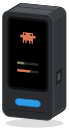 |
M5Stack M5StickS3 | 135×240 ST7789P3 stick, no touch, speaker. BtnA is Space/voice, BtnB is PWR. |
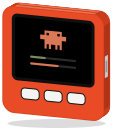 |
M5Stack FIRE IoT Development Kit (PSRAM) V2.7 | 320×240 IPS, classic ESP32 with PSRAM, no touch screen: A = Space, C = Shift+Tab, B = PWR (brightness, hold to pair). |
 |
LILYGO T-Display S3 | 170×320 IPS TFT, no touch. BOOT is push-to-talk, the second button (IO14) is the PWR role. |
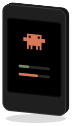 |
Waveshare ESP32-S3-Touch-LCD-2 | 240×320 IPS, 2 inches, touch-only (no usable buttons). |
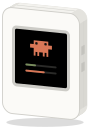 |
Waveshare ESP32-S3-ePaper-1.54 | 200×200 black-and-white e-paper, no touch. Minimal UI, slow partial refresh. |
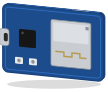 |
Xingzhi Cube 1.83 inch TFT WiFi (2-mic) | 284×240 landscape TFT, no touch, 3 buttons. Vendor init table on the ST7789 driver. |
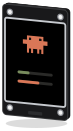 |
Freenove ESP32-S3 Display 2.8 inch (non-touch, FNK0104A) | 240×320 IPS, no touch. Minimal UI: meters and a still Clawd; BOOT: brightness, hold to pair. |
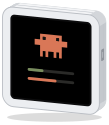 |
Seeed Studio SenseCAP Indicator D1L | 480×480 RGB touch screen. Side button: brightness / hold to pair; no HID buttons or sound. |
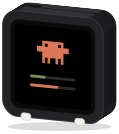 |
SpotPear ESP32-S3-LCD-1.54 MUMA (touch) | 240×240 ST7789 SPI LCD, CST816 touch, no PMU. BOOT is the only button. |
Install
Download the app from the latest release.
| OS | Package | Install |
|---|---|---|
| macOS | .dmg |
Drag Clawdmeter to Applications. If blocked, use System Settings → Privacy & Security → Open Anyway. Allow Bluetooth access. |
| Windows | .msi |
Run the installer. If SmartScreen blocks it, choose More info → Run anyway. |
| Debian, Ubuntu | .deb |
sudo apt install ./clawdmeter_<version>_amd64.deb |
| Other Linux | .AppImage |
chmod +x clawdmeter-*.AppImage, then run it. |
| NixOS, Nix | Flake | nix run github:HermannBjorgvin/Clawdmeter |
The macOS and Windows packages aren't signed with a publisher certificate. See the user guide for Linux requirements, portable archives, and Nix setup.
Quick start
- Launch Clawdmeter and follow setup. Connect the board with a USB data cable, check the selected board, and install firmware.
- Pair Clawdmeter in your computer's Bluetooth settings. It appears as a keyboard because its buttons send key presses.
- Open Hooks to let Clawd react to Claude Code activity and alert when a session needs an answer. Review the changes before saving. Usage meters work without hooks.
- Enable Settings → Start at login if you want the app to launch when you sign in.
Docs
- User guide: setup, device controls, settings, and connection help.
- Development: builds, simulator, and releases.
- Add a board: hardware ports and app integration.
- BLE protocol: payload fields and notifications.
- Clawd's director: behavior and character rules.
- Legacy daemon parity: upgrade steps and implementation differences.
Licensing gray area warning
The software in this repository uses and adheres to the Anthropic brand guidelines and uses the same proprietary fonts that Anthropic has a license for but this software uses without permission as well as using assets from Anthropic such as the copyrighted Clawd mascot so even though the code in this repo is non-proprietary I will not license it myself under a copyleft license since this repo includes proprietary fonts and copyrighted assets. Please be aware of this if you fork or copy the code from this repo. You have been warned!