Vela
The best of OpenStreetMap and Google Maps, in one app.
Live traffic, real place data and turn-by-turn navigation, with no Google account, no Play Services and no Google code on your phone.


Install · What you get · Docs · FAQ · The book · Privacy · How it works · Build · Discussions · Translate

[!warning] Vela is in beta, so you may run into bugs. If you do, open an issue and fill out the template. Nightlies and canary builds are newer still and less tested than the weekly stable.
An open-source Google Maps alternative for Android: what NewPipe is to YouTube, for Google Maps. The map is open data. The basemap is open vector tiles (OpenStreetMap), and the places on it are Vela data: Overture Maps and AllThePlaces, positioned with OpenStreetMap, baked into tiles in this repo and streamed from its releases. Just panning around the map never asks Google anything. Search, tap a place or ask for a route, and the phone itself asks Google's public web endpoints, with no account, no key and no server in between, for what only Google does well: search, hours, reviews, photos, and routes that know about traffic and closed roads. Built for degoogled phones such as GrapheneOS, and it runs on stock Android too.
What reaches Google, by default
It is not a Google Maps wrapper. Vela is a native Android app drawing open vector tiles (Jetpack Compose and MapLibre). There is no Google SDK in it, no Play Services, no API key and nothing to sign in to. It looks like Google Maps on purpose.
| What you do | What reaches Google |
|---|---|
| Pan, zoom, browse the map | Nothing. Tiles from OpenFreeMap, streets and labels from OpenStreetMap |
| The places drawn on the map | Nothing, where Vela has place data. Open data baked in this repo: Overture Maps and AllThePlaces, positioned with OpenStreetMap. Where Vela has none for the area on screen, Google's places are drawn and Google is sent that area |
| Drop a pin, tap a house number | Nothing. OpenStreetMap's Nominatim names the spot |
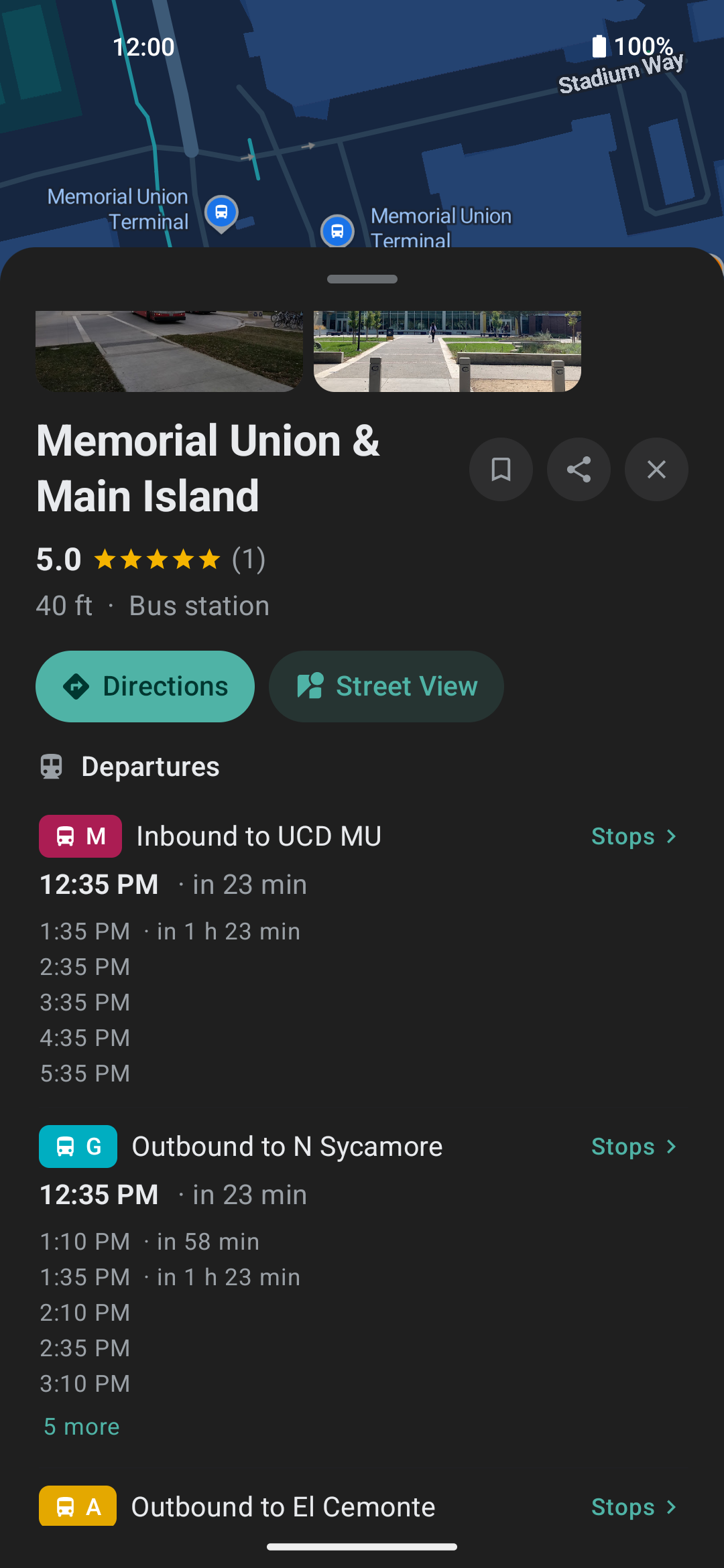
| Read a departure board | Nothing, for the stops Vela draws from open transit data: the board comes from Transitous. Where Transitous has no coverage, Vela falls back to the stop's Google page |
| Ask for directions | Where the trip starts and ends, anonymously. A driving route is Google's own, so it knows about traffic and closed roads. The turn-by-turn instructions are put on it from OpenStreetMap, by the open OSRM and Valhalla routers, which are sent the same trip. While you drive, Google is asked again when you leave the route and every couple of minutes for traffic; Settings → Navigation turns the second off. Walking and cycling routes come from the open routers (for a walk Google is asked once, and its route used only when it is much shorter). Offline, the route is computed on the phone |
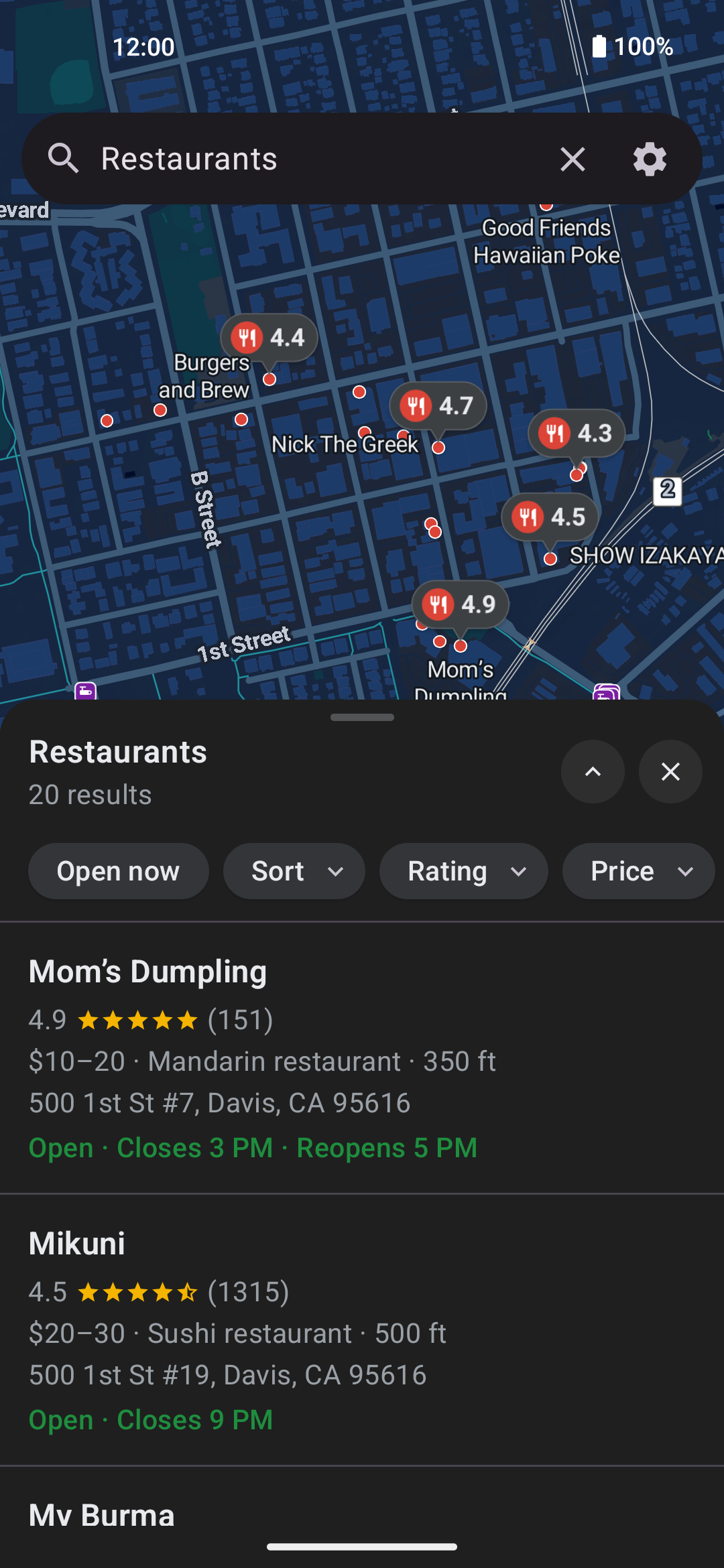
| Type a search | Your text, anonymously, like a logged-out browser. Typing sends Google's own autocomplete each time you pause; submitting sends a Google search. Text that starts with a house number also goes to the open Photon geocoder |
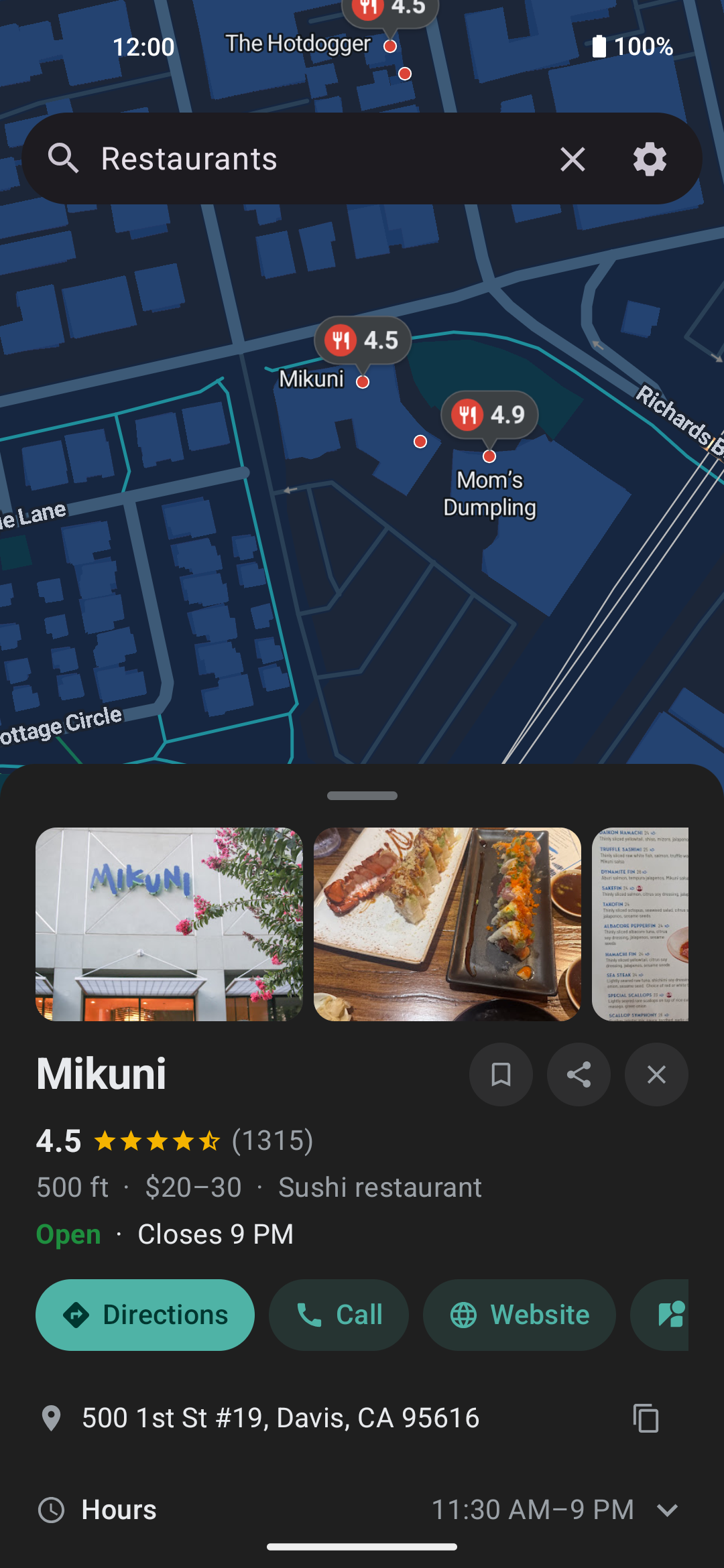
| Tap a place | An anonymous lookup of that place, with no account and no app key, for its hours, reviews and photos. Settings → Places can stop the lookup for places tapped on the map |
| Everything you save | Nothing, ever. No account, no Vela backend, no Vela telemetry; saved places, history and settings stay on the phone |
Download a region and the map, search, routing and turn-by-turn navigation work with no network. Offline, or with Settings → Privacy → Use Vela without Google on, nothing reaches Google at all. The first run asks which you want, before the map loads. A few things Google only serves to a real browser, a place's reviews among them, are read from a Google page in an offscreen WebView, anonymously; the list is in PRIVACY.md.
The full comparison against the Google Maps app and Google Maps web is below, and the per-request detail is in PRIVACY.md.
Screenshots
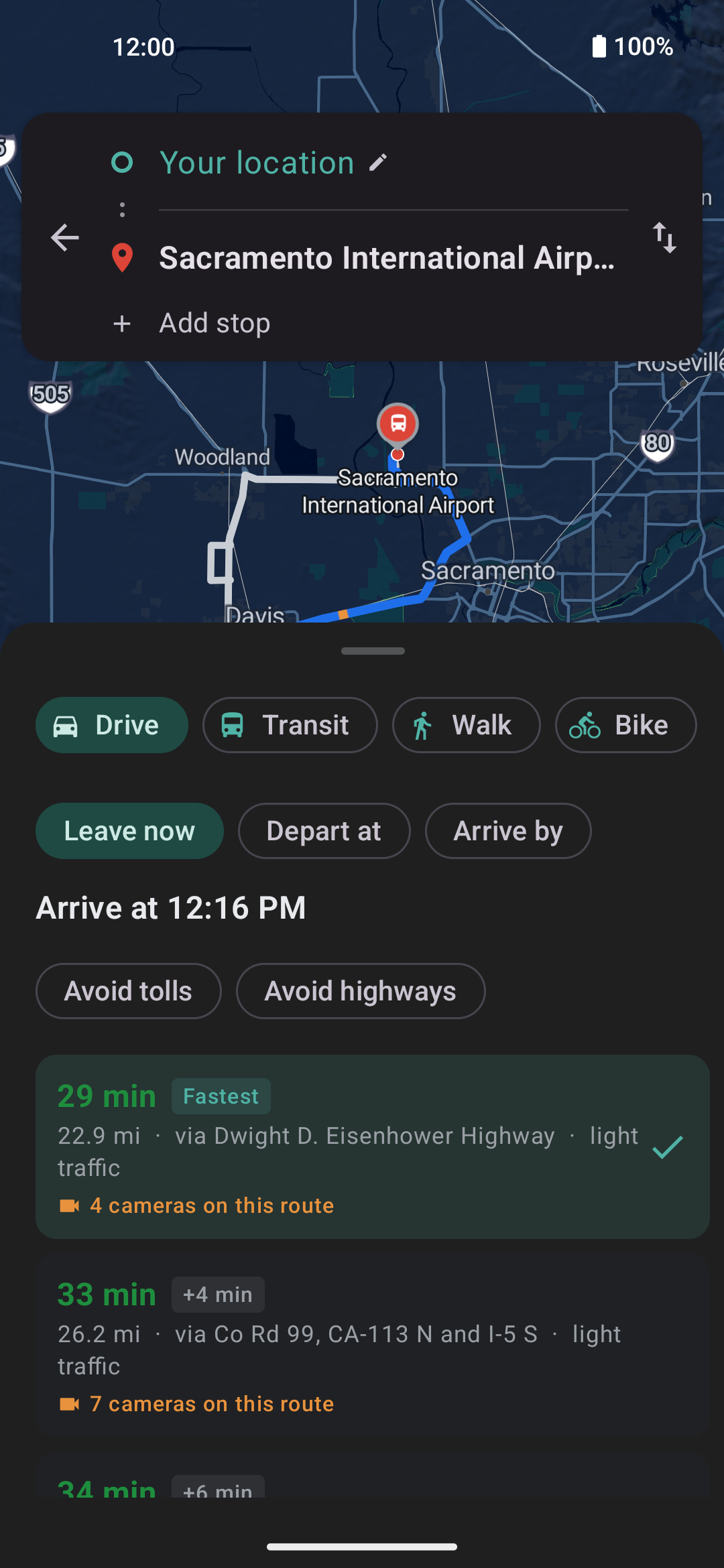
| Navigation | Map & search | Place details | Directions | Search results |
|---|---|---|---|---|
 |
 |
 |
 |
 |
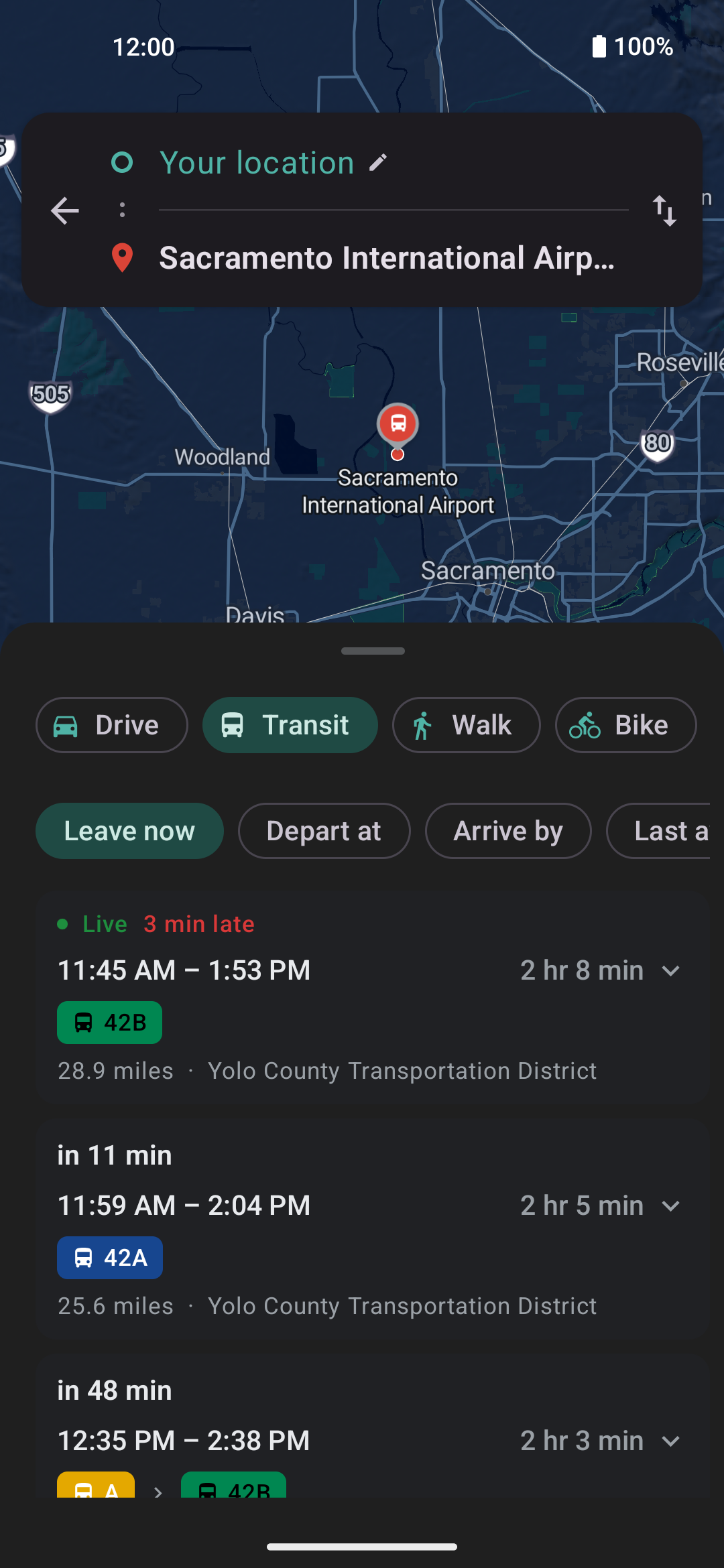
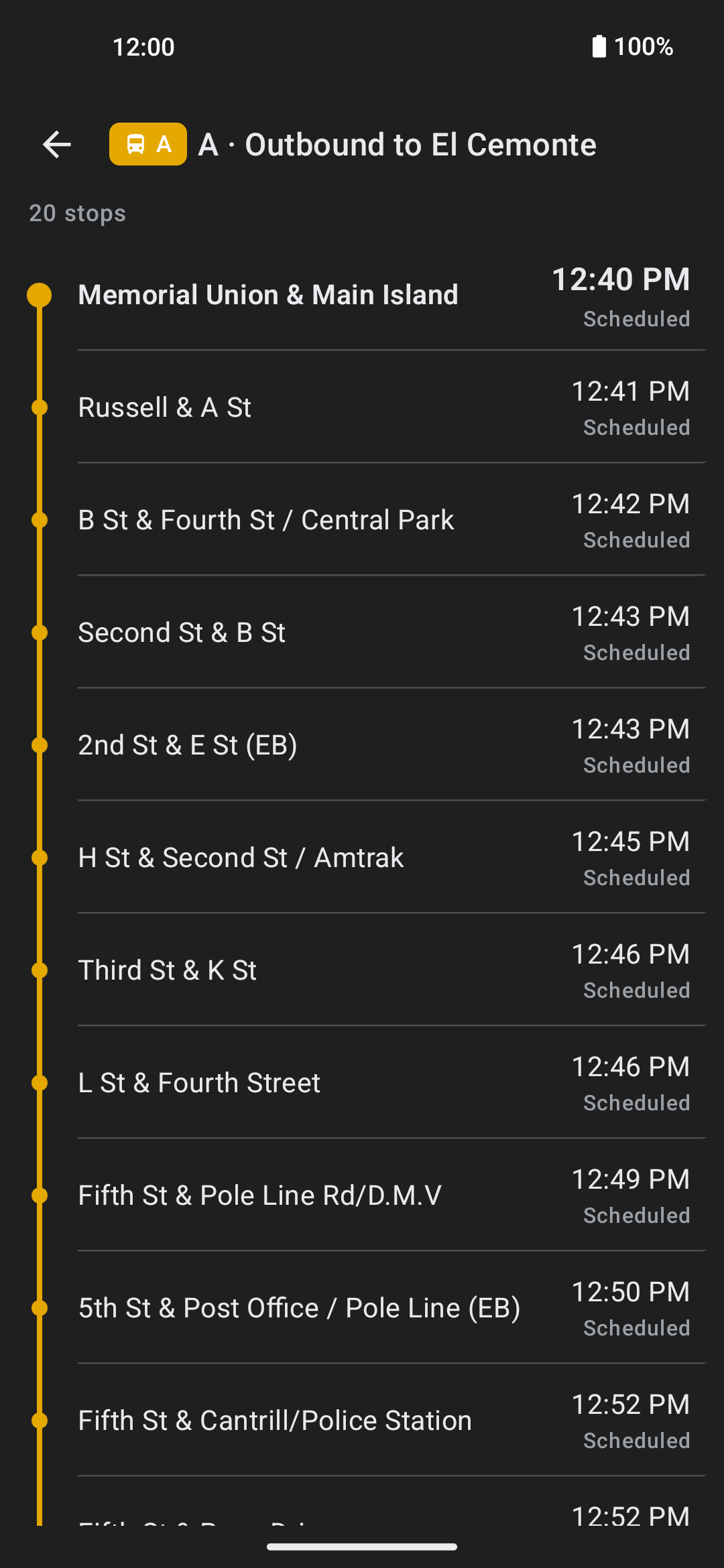
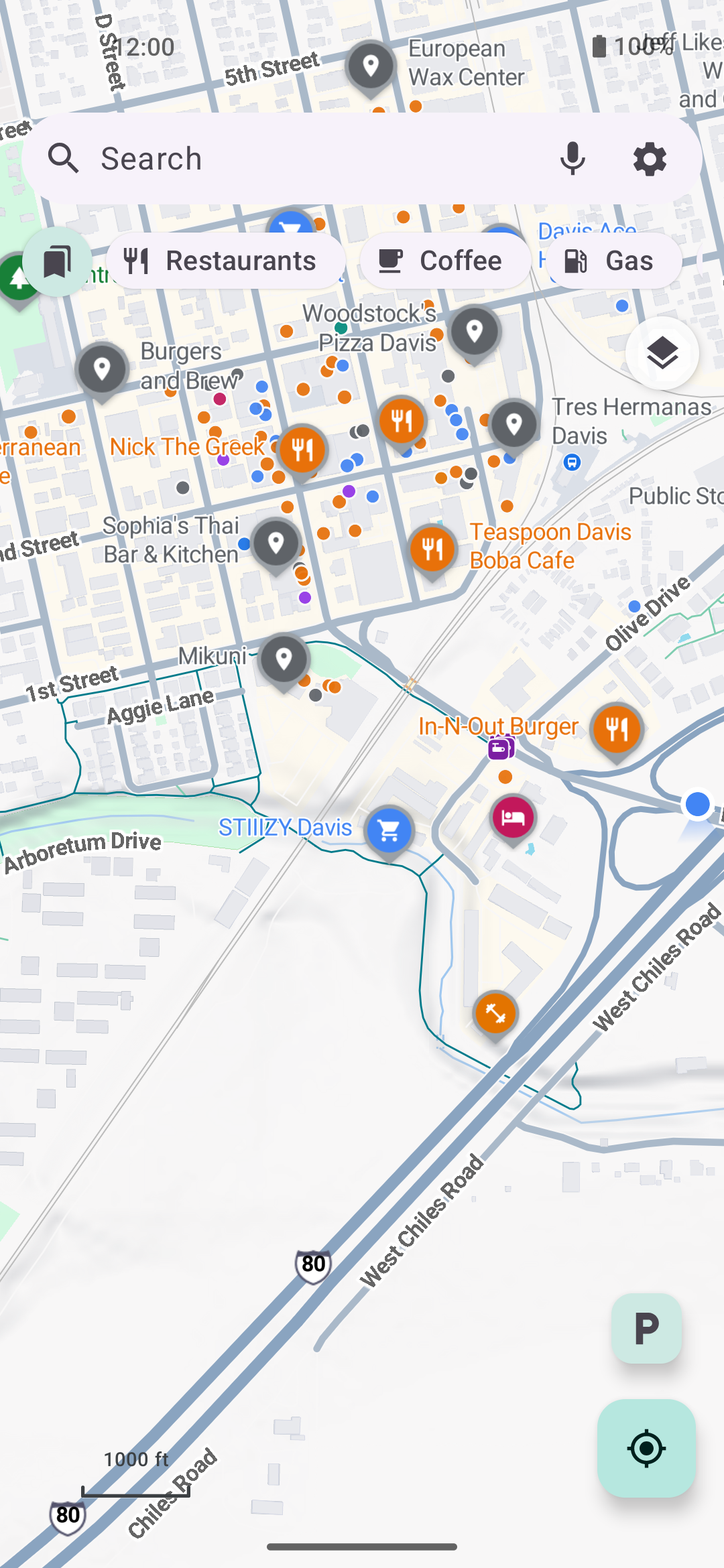
| Public transit | Departure board | Stops on the line | Light theme - map | Light theme - place |
|---|---|---|---|---|
 |
 |
 |
 |
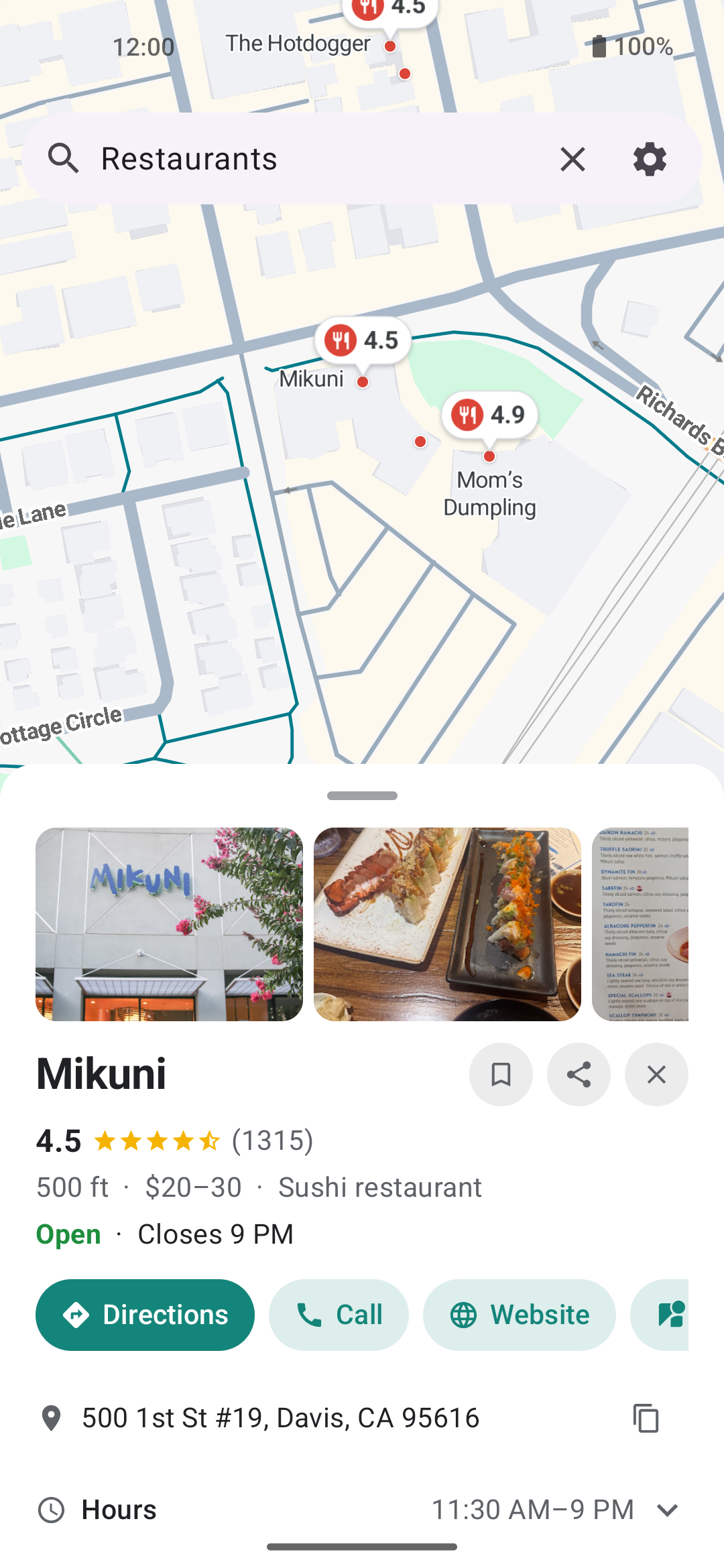 |
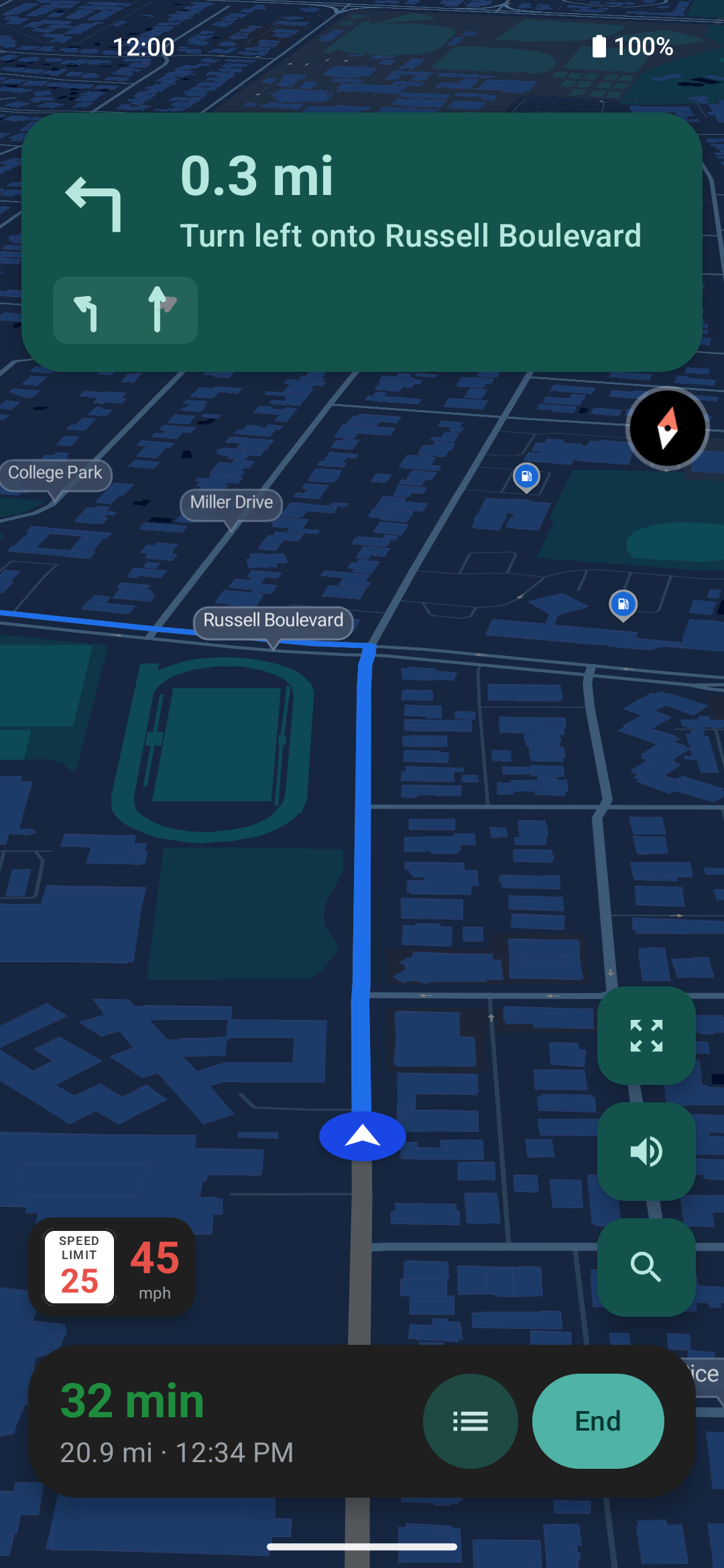
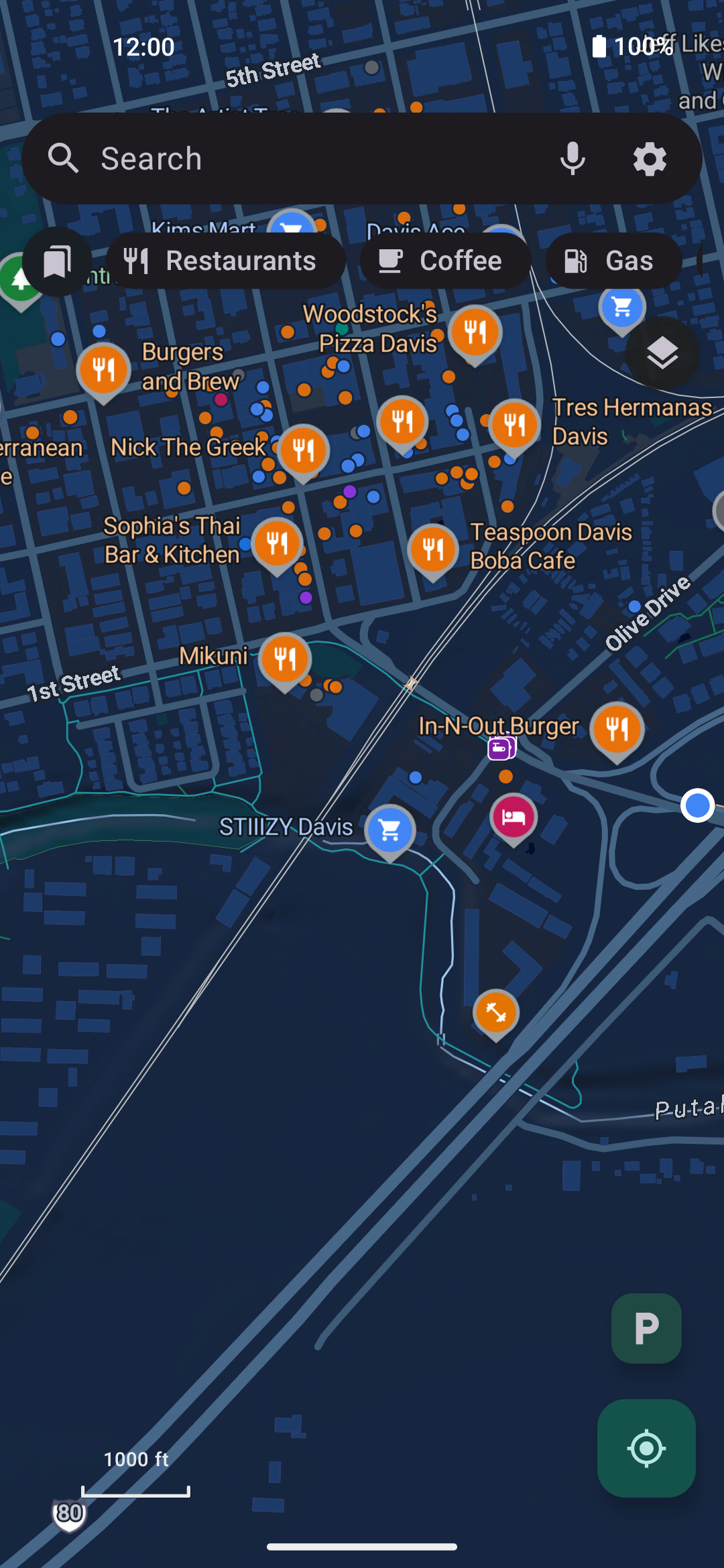
Turn-by-turn with lane guidance, route shields and the speedometer. The OpenFreeMap basemap in Google's colors with Google Sans Flex labels. Place pages with live data. The route picker with alternates, traffic and the avoid switches. Live departure boards with the stop list for every route. Light and dark themes, set in the app.
Install


Obtainium tracks the weekly stable release. Turn on "include prereleases" for the nightly channel.
The F-Droid badge is Vela's own repository, not the f-droid.org catalog. Add
https://pimpinpumpkin.github.io/Vela/repo to any F-Droid client and it serves
the same signed APKs, weekly stable by default (fingerprint and nightly setup in
FDROID.md). Or take an APK straight from
Releases.
Check you got the real thing
Every Vela APK, from any channel, is signed with the same key. Its certificate fingerprint is:
SHA-256 29:93:8B:48:58:06:3E:42:E6:77:FF:95:C9:01:CD:48:24:8A:7F:03:2A:3A:E8:5F:9B:9E:56:17:56:8B:0D:36
Check a downloaded file against it before installing:
apksigner verify --print-certs vela-maps-*.apk
On the phone, App Verifier checks the same thing. It wants the package name on the first line and the fingerprint on the second, so paste this block, not the line above:
app.vela
29:93:8B:48:58:06:3E:42:E6:77:FF:95:C9:01:CD:48:24:8A:7F:03:2A:3A:E8:5F:9B:9E:56:17:56:8B:0D:36
Android enforces this for you after the first install: an update signed with a different key is refused, so a build that installs over your existing Vela came from the same place this one did.
This is the certificate the app is signed with, and it stays the same across releases. It is not a checksum of a particular APK, and it is not the same as the F-Droid repo fingerprint in FDROID.md, which signs the repo index rather than the app.
The website is velamaps.org, and the docs in this repository are published as a searchable site at pimpinpumpkin.github.io/Vela/docs.

What you get
Routes and traffic from Google. A driving route is the one Google would give you, with live traffic and closed roads accounted for. Each option shows its time in green, amber or red and says light, moderate or heavy traffic in words. Turn-by-turn navigation runs on top: lane diagrams, exit shields, a speedometer with the posted limit, and a faster-route offer when a jam builds ahead.
The places on the map are open data, and Google fills in the details. Every pin, dot and label you pan past is Vela data: Overture Maps and AllThePlaces, positioned with OpenStreetMap, baked into map tiles in this repo, streamed from its releases and carried offline with a downloaded region. Browsing sends Google nothing. Tapping a place asks Google for what open data lacks: hours with holidays, reviews you can search, photos, busy times, phone and website, and a warning if the place will be closed when you arrive. Settings → Places → "Place icons on the map" switches the map between Vela data (the default), Both, or Google, and a separate switch stops a tapped place from being looked up. The FAQ says what each feature uses.
No Google software on your phone. No Play Services, no account, no app key, no ads. Google never sees your map browsing or your saved places, and your GPS trail stays on the phone. A position reaches Google only in specific requests: a route from where you are, a search that ranks nearby places first, and the reroute and traffic checks while you navigate. Privacy has the breakdown.
Flock cameras on the map. Mapped license plate cameras (the community DeFlock project's OpenStreetMap data) are drawn out of the box. Avoid surveillance cameras, in Settings → Navigation or the route picker, counts the cameras pointed along each route and picks a lower-camera one when the detour is small. Two more switches give a card or a spoken "License plate camera ahead" as you approach one. The dataset lives on the phone and updates weekly.
Vela Voice. Spoken directions from a neural voice that runs on the phone, and a mic that transcribes your search on the phone too. Nothing you say goes to a speech service.
🔊 Hear it, the in-app voice at its default pace:
https://github.com/user-attachments/assets/17f246e4-51c8-4d01-998b-dcd7f29dc15f
Offline maps and routing. Download a state or a country, or just the area on screen, and its map, its places, typed street addresses and turn-by-turn routing work with no signal.
Public transit. Departure boards and the stop list of every run come from the open timetables transit agencies publish (served by the community Transitous project). Transit directions come from Google, with the open planner as the fallback. Rail lines draw in their own colors, and a trip draws along its real track.
Gas prices. Search for gas and each station's price is on its marker, in the list and on its page.
Street View in the app: look around, walk the street, go back to older captures, half screen over the map or full screen.
Satellite imagery from Esri.
Lists and saved routes. Keep places in lists with a note each, save a route you like, pin a trip to the home screen, and back all of it up to a file. Paste a shared Google Maps list or a My Maps link into the search bar to import it.
Parking. Tap P when you park, tap the pin later for the walk back.
Say it or type it. "Take me home", "navigate to the station", "Davis to San Francisco", "nearest pharmacy", "what's my ETA": the search box treats those as actions, spoken or typed, in every language the app speaks.
It repairs itself when Google moves things. The request recipes live in a signed file the app checks at launch. When Google shifts a field, a fix reaches every install in minutes with no app update.
SPEC.mdsections 3 and 11 describe it.The rest. 19 languages, light and dark themes, optional wallpaper colors, full operation by D-pad on keypad phones, a built-in updater with stable, nightly and canary channels, and Android Auto screens (a car accepts a sideloaded app only in some setups; see docs/ANDROID-AUTO.md).
The whole list is in FEATURES.md.
Why Vela talks to Google at all
A phone without Google Play Services cannot run Google Maps, and the open map datasets fall well short on search, reviews, hours and live traffic. So for those, Vela is a client of Google's public web endpoints. It asks them the way a logged-out browser does, from each user's own phone, with no account, no shared API key and no server in the middle. NewPipe does the same for YouTube. There are no ads, and your search history, saved places and settings stay on the phone.
The map, the streets, the labels and the house numbers come from OpenStreetMap (in much of the US the house numbers come from OpenAddresses). The businesses on the map come from Overture and AllThePlaces. Google is used for search, place details, driving routes and traffic, plus things you open yourself such as Street View and transit directions. So street names and house numbers can differ from what Google Maps shows, and how much you see offline depends on how well OpenStreetMap covers your area. I'm thinking of ways to improve OSM and fill the gaps in the data. Stay tuned.
Privacy
There is no Vela backend, no account and no Vela telemetry. Vela fetches from
Google directly from your phone like a logged-out browser. Google sees your IP,
your query and the map area, but not a Google account or any app key, much
like google.com/maps in an incognito window. Google does keep its own
logged-out session cookie; Vela starts a new one every week by default
(Settings → Privacy → Google session: weekly, daily, or every launch, plus a
button to start one now). Your saved places, history and settings never leave the
device. What each service receives is in PRIVACY.md.
In short, Google goes from knowing who you are and everywhere you go to answering anonymous questions now and then. With the default place source your map browsing never reaches Google, and your GPS trace is never uploaded anywhere. While you navigate, Vela asks Google for fresh traffic from your current position every couple of minutes, which is what powers the faster-route offers and the live arrival time. Settings → Navigation → "Live traffic re-checks while navigating" turns that off. Reroutes when you leave the route stay, because turn-by-turn cannot work without them.
| What Google gets | Google Maps app | Google Maps web | Vela |
|---|---|---|---|
| Tied to your Google account | Yes, always signed in | Yes unless incognito | Never. There is no login |
| A persistent device identifier | Yes (device and ad IDs via Play Services) | Browser cookies | No account, no app key. A logged-out Google session cookie that Vela replaces weekly by default, and an IP like any website visitor |
| Your precise GPS position | Continuously while open, plus Location History if enabled | While the tab is open | Never while browsing. Searches send the map area you are looking at and, to rank nearby places first, can ask about a small area around you. A route from your location sends that point as the start. While navigating, reroutes and the optional traffic re-check send your current position |
| Every pan and zoom of the map | Yes, their servers render the map | Yes | No, by default. Map tiles come from OpenFreeMap and the places on them from Vela's own data |
| Your searches | Yes, saved to your account history | Yes | The text reaches Google anonymously, as you type (autocomplete) and when you search |
| Place pages you open | Yes | Yes | The place lookup reaches Google anonymously, under that logged-out session cookie |
| Turn-by-turn routes | Yes, full trip telemetry | Yes | Google is asked anonymously for the route between two points, and again during the drive for reroutes and the optional traffic re-check. The open OSRM and Valhalla routers get the same trip, to supply the turn instructions. Your GPS trail as a whole never leaves the phone |
| Saved places, home, work | Stored on their servers | Stored on their servers | Stored only on your phone |
| Ad profile building | Feeds your ads profile | Feeds your ads profile | Nothing to attach it to |
| Works with no Google contact at all | No | No | Yes. One switch (Settings → Privacy → Use Vela without Google), and downloaded regions show the map, search, route and navigate offline |
How it works
SPEC.md is the technical reference: the basemap, the places bake, the requests to Google, routing, navigation, the offline data and the signed remote-repair channel. The book explains each subsystem in plainer words.
| File | What's in it |
|---|---|
SPEC.md |
Every technical rule, contract and constant |
docs/book/ |
Each subsystem explained: how places rank, when data is rebuilt, how a route is put together |
FEATURES.md |
What the app does, one line each |
PRIVACY.md |
What each service receives |
docs/FAQ.md |
The questions people ask first |
ROADMAP.md |
What is open. What shipped or was dropped is in docs/ROADMAP-HISTORY.md |
docs/BUILDING.md |
Building from source |
docs/TRANSLATING.md |
The languages, and how to translate (in the browser on Weblate) |
docs/dpad.md |
Operation without a touchscreen |
CLAUDE.md |
Rules and traps for anyone changing the code, human or AI |
GrapheneOS notes
- Location: Vela uses Android's own
LocationManager, never Google's fused provider. On GrapheneOS, enabling PSDS (Settings → Location) drops the cold GPS fix from about 30 seconds to a few. Indoors GPS may not lock at all: turn on Network location (Settings → Location → Location services). Vela shows a tip when no position has come after a few seconds.
Roadmap
Still open (details in ROADMAP.md):
- Android Auto without a Google Play listing.
- F-Droid's own catalog, which needs a build with no prebuilt parts.
- A Google Play listing, so Android Auto works on factory head units: a separate build with the Google half compiled out, while the full app stays on GitHub, Obtainium and F-Droid. A big job. On the radar, not started.
- An iOS build. The engine module is plain Kotlin and would move to Kotlin Multiplatform; the interface would be rewritten. On the radar, not started.
Not going to happen: anything that needs you to sign in to Google or hand data to a backend. That covers contributing reviews, photos or edits, live location sharing, a location timeline, and the data Google strips from anonymous requests (live busyness). No account and no server ever sees you.
A note on the name
Vela Maps (app.vela): the navigator's constellation "the Sails", and "sail"
in several languages.
Contributing
Read CONTRIBUTING.md first. It covers the hard rules (no
backend, no static Google keys, no Google libraries, the :core / :app module
boundary, docs in the same commit) and how to send a change. There is no separate
code of conduct: keep it about the code. Security issues go through
SECURITY.md (GitHub private vulnerability reporting), not a
public issue.
Map data
The map is OpenStreetMap data, © OpenStreetMap contributors, under the Open Database License, served as vector tiles by OpenFreeMap. Offline routing regions, place packs, house-number and building overlays are built from OpenStreetMap, OpenAddresses and Microsoft Building Footprints extracts and carry their licenses in the release notes of the hosting release. The places on the map are Overture Maps (CDLA-Permissive 2.0) and AllThePlaces data, positioned with OpenStreetMap. Closed places are weeded out with Foursquare OS Places (Apache 2.0), OpenStreetMap and Wikidata. Transit boards come from Transitous and the agencies' own GTFS feeds. UK fuel prices come from the UK government's Fuel Finder, through matthewgall/fuelfinder-archive, and contain public sector information licensed under the Open Government Licence v3.0. Satellite imagery is Esri World Imagery, with Google imagery where Esri has none at close zoom.
License

Vela is Free Software: you can use, study, share and improve it at your will. You may use, modify and redistribute this project only if your modifications remain open source under the same license.
The app bundles the Google Sans Flex font, copyright The Google Sans Flex Authors, under the SIL Open Font License 1.1. Google Sans Flex is a trademark of Google LLC; Vela is not affiliated with or endorsed by Google.